
Free ATR stop loss calculator for Indian traders.
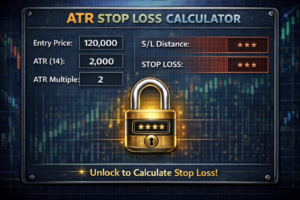
ATR Stop Loss Calculator
Free Intraday Trend Finder
ATR Stop Loss Calculator in India
The ATR Stop Loss Calculator helps traders set dynamic stop-loss levels based on market volatility. ATR stands for Average True Range, which measures how much price typically moves within a period. Instead of placing random or fixed stop losses, traders use ATR to adjust risk levels according to actual market behavior.
In the Indian stock market, especially for NSE intraday and swing traders, volatility changes throughout the day. Therefore, a stop loss that works during low volatility may fail when the market becomes highly volatile. Using an ATR-based stop helps traders stay in trades during normal fluctuations while still protecting capital.
How Does the ATR Stop Loss Calculator Work?
This calculator uses three inputs:
Entry price
ATR value
ATR multiplier
The ATR value reflects average price movement. The multiplier allows traders to widen or tighten the stop depending on strategy. Once values are entered, the tool calculates a recommended stop-loss level.
ATR Stop Loss Formula Used
The formula applied is:
Stop Loss = Entry Price − (ATR × Multiplier)
For short trades, the formula becomes:
Stop Loss = Entry Price + (ATR × Multiplier)
This ensures stop placement is based on market volatility instead of emotions.
Example Calculation
Entry Price = ₹500
ATR Value = ₹12
Multiplier = 1.5
Stop Loss = 500 − (12 × 1.5)
Stop Loss = ₹482
This means the trade allows normal price swings but exits if volatility exceeds expectations.
Why ATR Stop Loss Is Important
Fixed stop losses often fail because markets are not static. When volatility increases, tight stops get triggered frequently. On the other hand, very wide stops increase risk unnecessarily.
ATR stop loss provides balance. It:
Adapts to market volatility
Reduces premature stop-outs
Improves trade consistency
Protects capital efficiently
Professional traders prefer ATR stops because they respond to real market conditions.
Using ATR Stop Loss in Intraday Trading
Intraday markets move rapidly. Therefore, using ATR stops helps traders avoid being stopped out due to minor fluctuations. For example, during high-volatility sessions, ATR automatically increases, giving trades more breathing room.
Conversely, in low-volatility conditions, ATR shrinks, keeping stop losses tighter. This flexibility makes ATR stops ideal for day trading.
Using ATR Stop Loss in Swing Trading
Swing traders hold positions longer. Since markets can experience temporary pullbacks, ATR stops help avoid early exits. By setting stops based on volatility, traders allow trends to develop naturally.
Choosing the Right ATR Multiplier
Multiplier depends on trading style:
1× ATR → Tight stop
1.5× ATR → Balanced
2× ATR → Wider stop
Scalpers may prefer lower multipliers, while swing traders often use higher values.
Common Mistakes Traders Make
Using fixed stop losses
Ignoring volatility changes
Setting stops too tight
Risking too much per trade
ATR-based stops help avoid these mistakes by introducing structure.
Who Should Use This Calculator?
Intraday traders
Swing traders
Trend-following traders
NSE equity traders
Futures traders
Benefits of ATR Stop Loss
Dynamic risk management
Improved trade survival
Reduced emotional decisions
Better risk-reward alignment
FAQs
What is ATR in trading?
ATR measures average price movement.
Why use ATR for stop loss?
It adapts to volatility.
What multiplier is best?
1.5 to 2 is commonly used.
Is this useful for Indian traders?
Yes, especially for NSE markets.
Related Calculators
Disclaimer: This Calculator is for educational purposes only and does not provide trading or investment advice.