Latest Posts

Most Accurate Intraday Strategy

Most Accurate Intraday Strategy

Introduction: Why Every Trader Searches for the Most Accurate Intraday Strategy Intraday trading attracts lakhs of traders every single day in India. Everyone — beginners, students, job professionals, and even experienced traders — wants one thing: 👉 “What is the Most Accurate Intraday Strategy that works consistently?” Let’s be honest……
Read more


Intraday Trading Tips

Intraday Trading: Tips for Maximizing Your Profits Motivated beginner learning intraday trading Key Highlights Here are the main takeaways from our guide: Intraday trading involves buying and selling stocks within the same trading day. The primary goal is to achieve quick profits from daily price movements. Effective risk management is essential to protect your capital from market volatility. You must close all your positions before the market closes for the day. Using a reliable trading platform with good analytical tools is crucial for success. Unlike long-term investing, you do not take ownership of the shares you trade. Introduction Have you ever wondered if you can profit from the stock market in just a single day? That's where intraday trading, also known as day trading, comes in. It's a method of buying and selling stocks on the same day to capitalize on short-term price changes. All your trading positions are closed before the market ends, making it a fast-paced way to engage with the financial markets. Let’s explore how you can get started with this exciting trading style. Understanding Intraday Trading in India Intraday trading operates within the specific trading hours of the stock exchange. Unlike long-term investments such as mutual funds, the goal is not to hold assets but to profit from fluctuations in a stock's market price during a single trading session. To succeed, you need to understand the fundamentals of this approach. Let's look closer at what intraday trading is and the mechanics of how it functions. What is Intraday Trading? So, what exactly is intraday trading? It's the practice of buying and selling financial instruments, like stocks, within the same day. For example, a day trader might buy shares of ITC in the morning and sell them in the afternoon, aiming to profit from a rise in its market price. The key is that no positions are held overnight. The main objective is to capitalize on small price fluctuations. You aren't investing in the company for its long-term growth. Instead, you're speculating on its stock's movement during that specific day's trading hours. If you don't close your position by the end of the day, your broker will likely automatically square it off at the closing market price. This ensures that all transactions are completed within the day, and you don't end up owning the shares. How Does Intraday Trading Work? The process of intraday trading is straightforward. You start by identifying a stock you believe will experience a favorable price movement. Then, you place a buy order if you expect the price to rise or a sell order (short selling) if you anticipate a fall. Your goal is to close this position with an opposite order before the market close. For instance, if you bought a stock, you must place a sell order for the same stock before the trading day ends. The difference in price between your entry and exit points determines your profit or loss. This entire sequence happens within a few hours. Success depends on your ability to predict short-term price movement accurately and act quickly. It requires constant monitoring of the market and a clear strategy for entering and exiting trades. Key Features and Benefits of Intraday Trading Intraday trading is defined by its potential for quick profits and its fast-paced nature. Traders aim to benefit from daily price fluctuations, which can be amplified by market volatility. Since positions are not held overnight, you are not exposed to risks that might arise from after-market news or events. This trading style has several distinct features and offers some compelling advantages, especially for those who understand the risks. Let's explore the main characteristics and benefits for beginners. Main Features of Intraday Trading Intraday trading has several unique characteristics that set it apart from traditional investing. The focus is entirely on short-term gains rather than long-term capital gain. You make these intraday trades through a specialized trading platform. The core features include: Same-Day Settlement: All your buy and sell transactions must be completed within the official trading hours of the same day. No Ownership Transfer: Since you sell the stocks before the day ends, you never actually take ownership of them. The shares are not credited to your demat account. Use of Leverage: Brokers often provide leverage, allowing you to trade with more capital than you have. While this can magnify profits, it also increases risk. This approach requires diligent research and a clear strategy. You must analyze charts and use indicators to make informed decisions quickly, as all positions must be closed before the market shuts down. Advantages of Intraday Trading for Beginners For beginners who are willing to learn, intraday trading offers several appealing benefits. The most obvious is the potential for quick profits, as successful trades can yield returns within hours or even minutes. Here are some key advantages to consider: Reduced Overnight Risk: By closing all positions daily, you avoid the market risks associated with holding stocks overnight, such as negative news affecting prices before the next opening. Lower Brokerage Fees: Many brokers offer lower brokerage fees for intraday trades compared to delivery-based trading, making it more cost-effective for frequent traders. High Liquidity: Your capital is not tied up for long periods. You can enter and exit positions quickly, giving you greater financial flexibility. To leverage these benefits, you must learn to use technical indicators and develop sound trading strategies. This helps you identify opportunities and manage the inherent risks effectively. Essential Requirements to Start Intraday Trading Before you can make your first intraday trade, you need to have a few things in place. The most crucial requirements are a demat account to hold securities electronically and a trading account to execute buy and sell orders. You will also need to submit some related documents to your broker to get set up. Understanding the brokerage charges associated with intraday trading is also important. Let's walk through how to set up your account and what tools you'll need to begin your journey. Setting Up a Trading Account Your first step is to open a trading account and a demat account with a registered stockbroker or a company offering financial services. The demat account holds your securities in a digital format, while the trading account is the interface you use to buy and sell stocks on the exchange. When choosing a broker, compare their brokerage fees for intraday trading. These charges are often lower than for delivery trades, where you hold stocks overnight. Some brokers even offer flat-fee plans, which can be beneficial if you plan to trade frequently. The account opening process is now mostly online and quite straightforward. You will need to provide your identity proof, address proof, and bank account details. Once your account is active, you can fund it and start trading. Tools and Resources Needed for Intraday Trading Having the right tools is critical for success in intraday trading. A reliable and fast trading platform is your most important resource, as it allows you to execute trades without delay. Here are some essential tools and resources: Advanced Charting Software: You need access to real-time charts with various technical analysis tools to spot price trends and patterns. Technical Indicators: Tools like moving averages, RSI, and Bollinger Bands help you make informed decisions about when to enter or exit a trade. Stock Screeners: An intraday screener is a tool that helps you filter and find stocks that meet specific criteria, such as high liquidity and volatility, making them suitable for day trading. Research Reports: Access to insights from a research analyst can provide valuable information about market sentiment and potential trading opportunities. These resources empower you to analyze the market effectively and react quickly to changing conditions, which is the essence of intraday trading. Step-by-Step Guide: How to Start Intraday Trading as a Beginner Starting your intraday trading journey can feel overwhelming, but breaking it down into manageable steps makes it easier. The process begins with education and preparation before you even open your trading account and risk real money during the trading day. You must learn to analyze market conditions, select the right stocks, apply strategies using technical analysis, and manage your risk. Let's go through each step to build a solid foundation for your trading career. Step 1: Learn the Basics of Stock Markets Before anything else, you must invest time in learning the fundamentals of the stock market. Understand how it operates, what drives price movement, and the key terminology used by traders. Rushing into trading without this knowledge is a recipe for disaster. Familiarize yourself with concepts like market hours, different types of orders, and what liquidity and volatility mean. Knowing how a typical trading day unfolds will help you anticipate market behavior and plan your trades more effectively. There are numerous online resources, books, and courses available to help you learn. Start with the basics and gradually move to more advanced topics. A solid educational foundation is the most important asset for any new trader. Step 2: Select the Right Stocks for Intraday Trading Not all stocks are suitable for intraday trading. The right selection can significantly impact your success. You should focus on stocks that have specific characteristics which create trading opportunities. Here are some criteria for selecting stocks: High Liquidity: Choose liquid stocks that can be bought and sold easily without causing a major change in price. High liquidity ensures you can enter and exit trades smoothly. Moderate to High Volatility: Stocks with decent price swings offer more profit potential. However, avoid extremely volatile stocks, as they can lead to significant losses. High Trade Volume: A high trade volume indicates strong interest in the stock, which often leads to more predictable stock price movements. Correlation with Major Indices: Stocks that move in line with major market indices can be easier to trade, as the broader market trend provides an additional signal. Using a stock screener can help you quickly identify stocks that meet these criteria each day. Step 3: Apply Intraday Trading Strategies Once you've selected your stocks, you need a strategy to trade them. Intraday trading heavily relies on technical analysis to predict short-term price movements. This involves studying price charts and using various indicators to identify entry and exit points. Some popular strategies for beginners include momentum trading, where you trade in the direction of a strong price trend. Another common approach involves using technical indicators like the moving average to determine the underlying trend or Bollinger Bands to gauge volatility. It's wise to practice these strategies in a simulated or paper trading account before using real money. This allows you to test your methods and build confidence without financial risk. Find a strategy that suits your personality and risk tolerance, and stick to it with discipline. Step 4: Manage Your Risk and Monitor Trades Effective risk management is what separates successful traders from the rest. The high-speed nature of intraday trading and market volatility mean that you can incur significant potential losses if you are not careful. Follow these key risk management principles: Use a Stop-Loss: Always set a stop-loss order for every trade. This is an automatic order that closes your position if the price moves against you to a certain point, limiting your loss. Set a Profit Target: Just as you limit your losses, you should have a target for taking profits. Set an upper limit for your trades to lock in gains. Don't Risk Too Much: A common rule is to risk no more than 1-2% of your trading capital on a single trade. Avoid Over-Trading: Stick to your plan and don't chase every small price movement. Quality trades are better than quantity. By diligently managing your risk, you can protect your capital and stay in the game for the long run. Popular Intraday Trading Strategies and Tips To succeed in regular trading, you need a toolkit of proven strategies. These strategies are built on technical analysis and help you identify trading opportunities based on historical price changes and patterns. Combining these with effective risk management can greatly improve your chances of profitability. Below, we’ll explore some of the best and most popular intraday trading strategies that are particularly well-suited for beginners looking to navigate the markets. Best Intraday Trading Strategies for Beginners As a beginner, it's best to start with straightforward strategies that are easy to understand and apply. These often involve using common technical indicators to gauge price trends and momentum. While some concepts are shared with swing trading, intraday strategies focus on much shorter timeframes. Indicators like the Relative Strength Index (RSI) or the trade volume index can provide valuable signals. For instance, RSI helps determine if a stock is overbought or oversold, suggesting a potential reversal. Here is a look at some common indicators and how they can be used: Indicator What It Shows How to Use It Moving Average The average price of a stock over a specific period, smoothing out price trends. Look for crossovers between short-term and long-term moving averages as potential buy or sell signals. Bollinger Bands Volatility of a stock. Consists of a middle band (moving average) and upper and lower bands. Prices near the upper band may indicate an overbought condition, while prices near the lower band may suggest it's oversold. Relative Strength Index (RSI) The magnitude of recent price changes to evaluate overbought or oversold conditions. An RSI above 70 is often considered overbought (potential sell signal), and an RSI below 30 is considered oversold (potential buy signal). Momentum Oscillators The speed of price changes. Helps identify when a trend might be losing steam, signaling a potential reversal. Conclusion In conclusion, embarking on your intraday trading journey can be both exciting and rewarding. By understanding the foundational concepts and strategies outlined in this guide, you’re already on the right path to making informed decisions in the fast-paced world of stocks. Remember, successful trading requires patience, practice, and continuous learning. As you refine your skills and adapt to market dynamics, you'll gain confidence and enhance your trading performance. If you're ready to take the next step and delve deeper into intraday trading, consider reaching out for a free consultation to get personalized insights tailored to your goals. Happy trading!

Intraday Trading Tips for Indian stock market Intraday trading tips explained with simple strategy concepts, entry planning basics, and risk management techniques to help beginners understand structured trading. Key Highlights Here are the main takeaways from our guide: Intraday trading involves buying and selling stocks within the same trading day….
Read more

How to choose the right stock for intraday trading

How to choose the right stock for intraday trading

How to Choose the Right Stock for Intraday Trading in India Introduction One of the most common reasons beginners fail in intraday trading isn’t their strategy — it’s stock selection.Even the best setup fails if you trade the wrong stock. In this guide, we’ll explain exactly how to choose the…
Read more

Best time frame for intraday trading

best time frame for intraday trading

Best Time Frame for Intraday Trading in India Introduction One of the biggest confusions for beginners in intraday trading is:👉 “Which time frame should I use for charts?” The right time frame can make or break your trade accuracy. Too short, and you get false signals. Too long, and you…
Read more

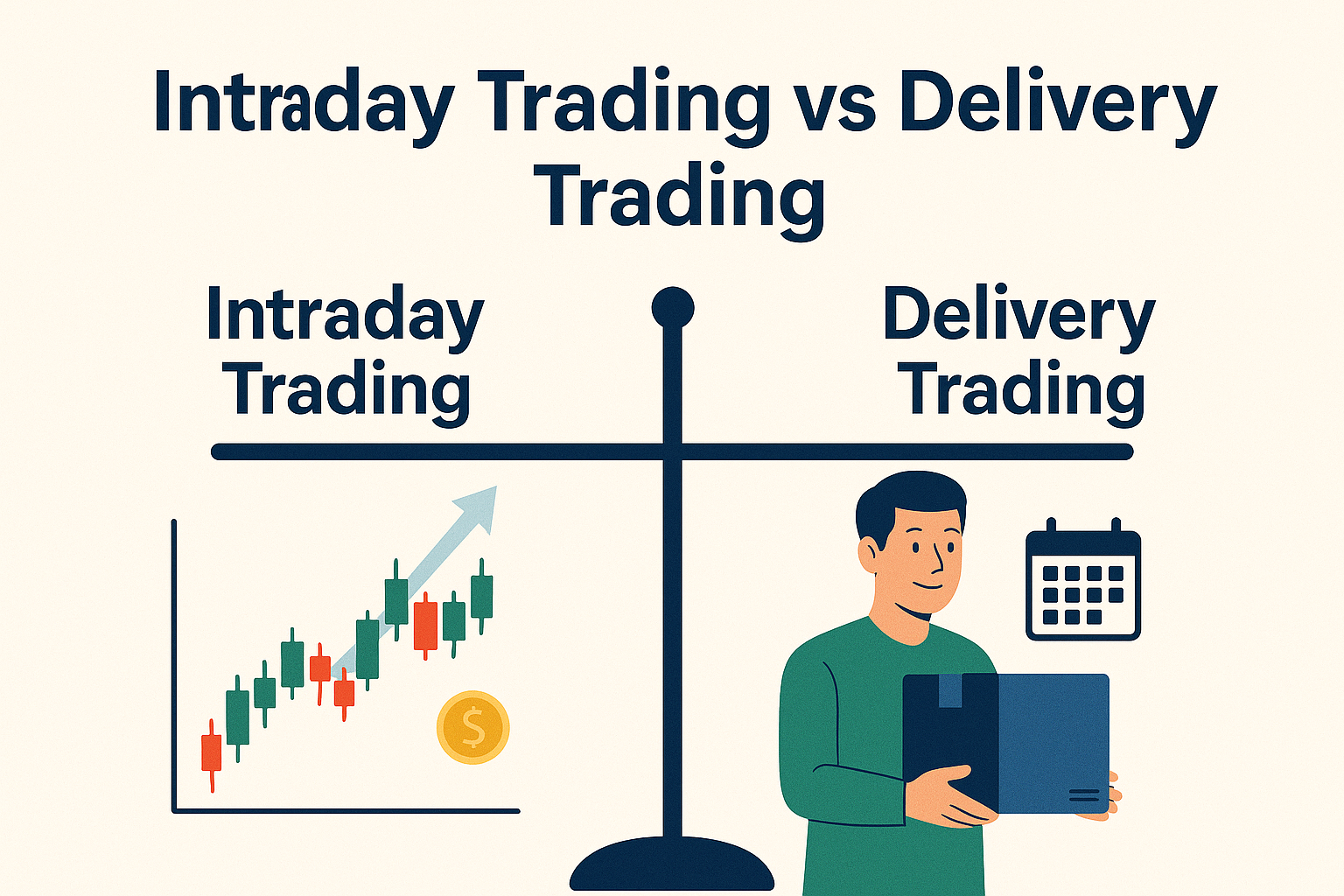
Intraday trading vs delivery trading

Intraday Trading vs Delivery Trading

Intraday Trading vs Delivery Trading: Key Differences Explained Introduction Every beginner entering the stock market faces one common question —Should I trade intraday or invest in delivery? While both involve buying and selling shares, the purpose, duration, and risk behind them are completely different. In this blog, you’ll clearly understand…
Read more

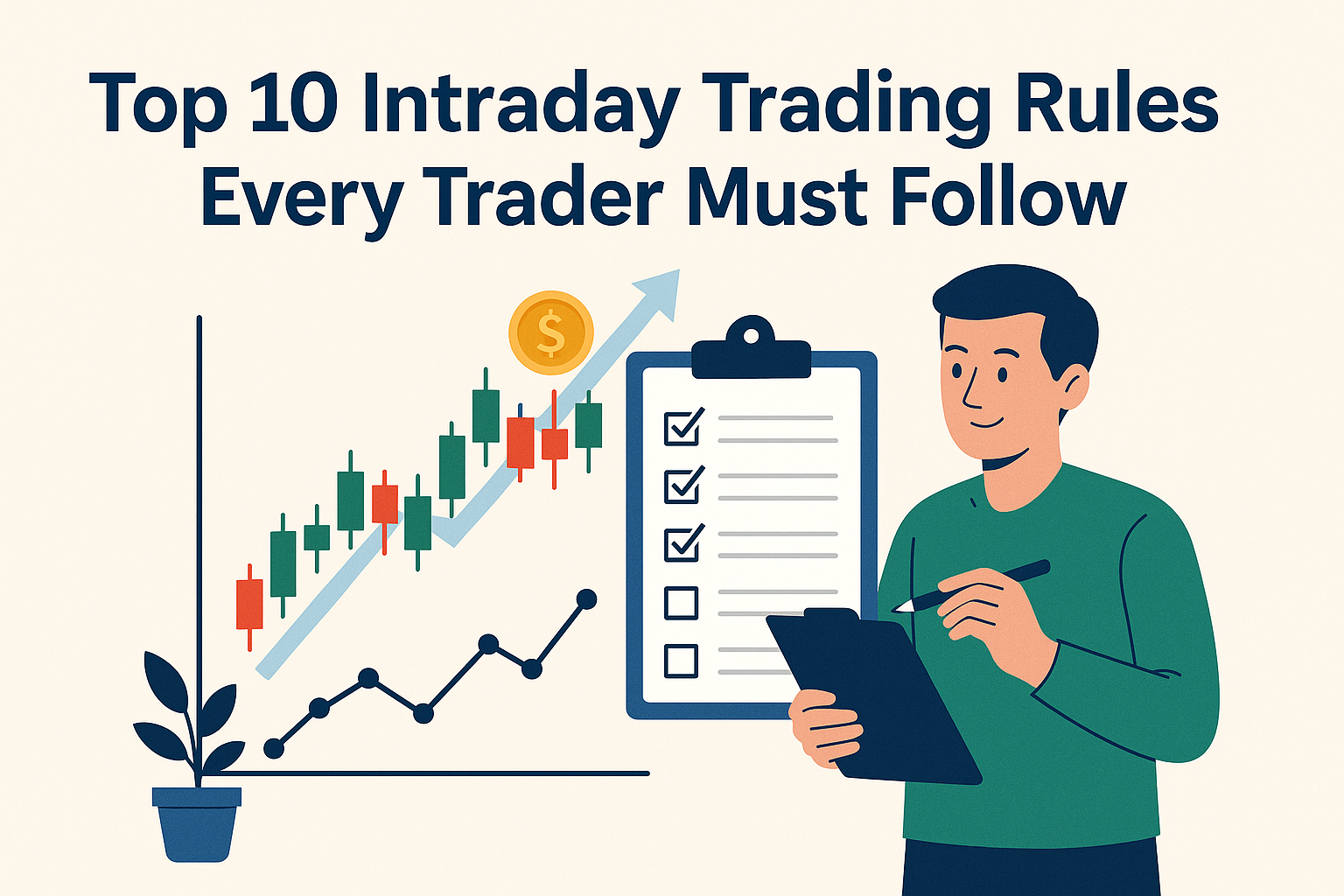
Top 10 intraday trading rules

Top 10 Intraday Trading Rules Every Trader Must Follow

Top 10 Intraday Trading Rules Every Trader Must Follow Introduction Intraday trading is not just about finding the right stock — it’s about discipline, consistency, and rule-based execution.Most traders lose money not because of bad strategies, but because they ignore basic trading rules. If you’re serious about building long-term success,…
Read more

Best Intraday Strategies for Beginners

Best Intraday Strategies for Beginners

Best Intraday Strategies for Beginners in India Introduction Intraday trading continues to attract thousands of new traders across India. The reason is simple — it offers the chance to earn profits within a single trading session. However, without a clear plan or tested strategy, beginners often face consistent losses. This…
Read more

What is intraday trading

What is Intraday Trading Complete Beginner’s Guide

📘 What is Intraday Trading? Complete Beginner’s Guide Introduction If you’re new to the stock market, one of the first things you’ll hear is intraday trading. You might wonder: What exactly is it? Is it safe? Can beginners make money from it? In simple words, intraday trading means buying and…
Read more

Top 5 Intraday Stocks For 9 September 2025

Intraday Stocks 9 September 2025 – Top 5 Intraday Trading Watchlist Overview Intraday Stocks 9 September 2025 are highlighted below based on technical structure, short-term momentum, and key price zones. This watchlist is prepared strictly for educational purposes. It does not provide investment advice or guaranteed trading outcomes. Since Intraday…
Read more

Top 5 Intraday Stocks For 8 September 2025

Intraday Stocks 8 September 2025 – Top 5 Intraday Trading Watchlist Overview Intraday Stocks 8 September 2025 are listed below based on short-term price structure, technical zones, and recent momentum patterns. This watchlist is prepared strictly for educational purposes. It does not provide financial advice or guaranteed trading outcomes.  Intraday…
Read more